Consider what the following have in common.
In ancient Babylon, circa 1200 BCE, scribes recorded a creation story in which the world begins as two serpentine bodies — Tiamat, the saltwater deep, and Apsu, the freshwater — churning together in primordial darkness. Before anything exists, there are serpents.
In the traditions of the Yolŋu people of northern Australia, the Rainbow Serpent moved across a featureless earth in the Dreaming, its body carving river valleys and waterholes as it went. The landscape that human communities would inhabit for tens of thousands of years was a serpent’s trace.
In the Norse cosmological vision recorded in thirteenth-century Iceland, the world exists because a serpent encircles it. Jörmungandr’s coiled body holds Midgard together; when it releases its tail, the world ends.
These traditions had no contact with one another. They did not share texts, trade routes, or mythological vocabulary. They belong to different millennia, different continents, different conceptions of what the cosmos is and how it works.
And yet: the serpent.
This article maps five functions that the primordial serpent performs, consistently and independently, across the full geographic and temporal range of human mythological production. It does not attempt to explain why — that question is addressed in a separate essay in this series. It attempts something more foundational: to show that the pattern is real, that it is robust, and that it cannot be explained away by cultural diffusion alone. The serpent is not simply a widespread motif. It is a recurring structural role, played by the same figure, in traditions that had every reason to differ and somehow arrived at the same image anyway.
I. Chaos and Creation
In the beginning — in a remarkable number of beginnings — there is a serpent.
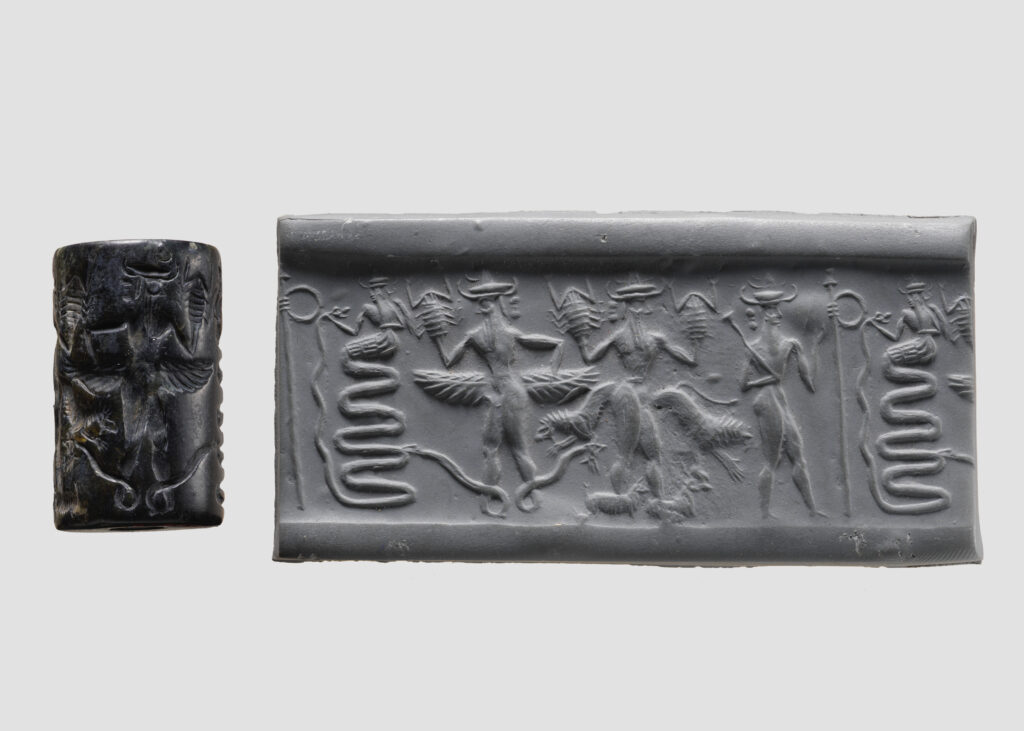
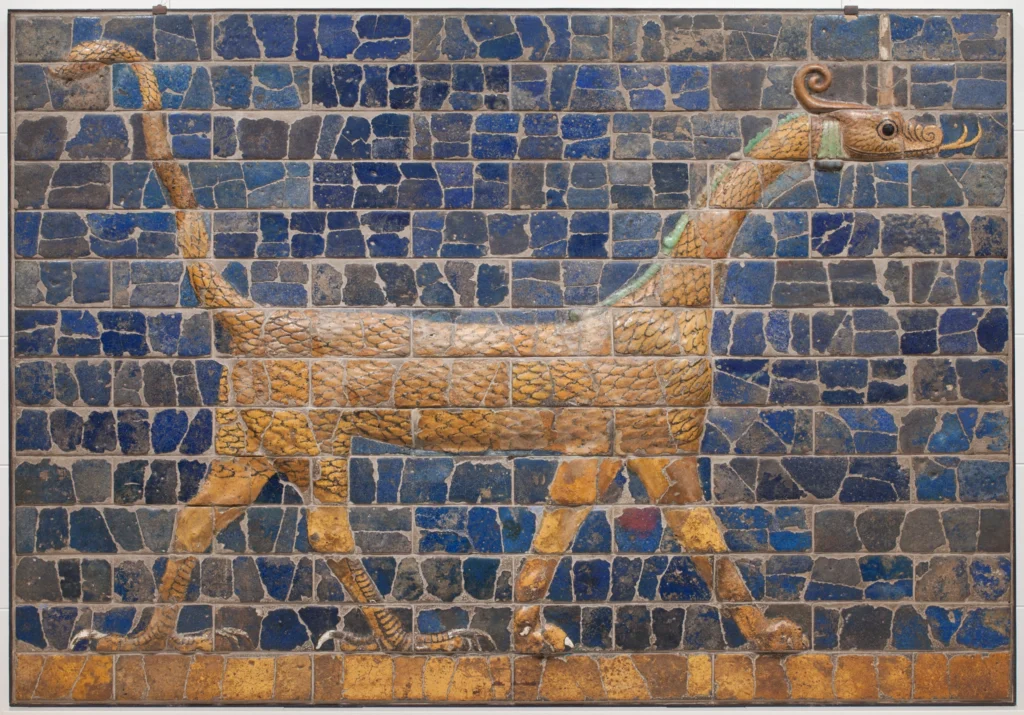
The Babylonian Enuma Elish, whose preserved text dates to approximately the twelfth century BCE but encodes traditions scholars regard as considerably older, opens on Tiamat: the primordial saltwater, rendered in serpentine and dragonine form, churning with Apsu the freshwater deep before anything else exists. The world does not emerge from nothing. It emerges from conflict. The god Marduk defeats Tiamat in combat and splits her body in two — one half becomes the sky, the other the earth. Creation is not a gift. It is a victory over chaos. And chaos, in Babylon, had scales.
Ancient Egypt ran the same logic nightly. Apep — rendered Apophis in Greek — is the chaos-serpent that assaults the solar barque of Ra each night as it traverses the underworld. The sun rises each morning because Apep has been repelled. This is worth pausing on: in the Egyptian conception, creation is not something that happened once in the past. It is something that must be won again every single night. The world is a permanent achievement against serpentine dissolution.
In ancient Greece, Apollo’s killing of the Python at Delphi belongs to the same structural family. Python is the chthonic occupant of the site before Apollo claims it; the god’s victory is the founding act of the Delphic oracle. The pre-Olympian, serpentine, and primordial gives way to the younger divine order — but the sanctuary retains, encoded in the Pythia’s very title, the memory of what it displaced.
What Calvert Watkins established in How to Kill a Dragon goes further. Across Indo-European languages — Sanskrit, Greek, Old Norse, Hittite — Watkins identified a shared verbal formula for the heroic slaying of a serpentine adversary. The same story, encoded in cognate words, carried by peoples whose common ancestors dispersed across Eurasia in the third and second millennia BCE. Indra versus Vritra. Apollo versus Python. Thor versus Jörmungandr. Tarhunt versus Illuyanka. The formula is not merely thematic. It is linguistic.
Which makes Aboriginal Australia the most arresting evidence of all.
In the traditions of many Aboriginal Australian nations — traditions with no conceivable relationship to the Indo-European world — the serpent at the cosmogonic moment is not the chaos that creation overcomes. It is the agent of creation itself. The Rainbow Serpent does not need to be defeated. It moves, and in moving, it makes the world. River valleys, waterholes, the features of a landscape inhabited for tens of thousands of years: a serpent’s work.
The structural position is shared across these traditions — the serpent at the threshold of existence — even where the role is inverted. In one tradition, the serpent is what must be killed for creation to occur. In another, the serpent is creation itself. What holds across both is the serpent’s location: at the origin, at the moment of beginning, before everything else.
That is not coincidence. It is a pattern.
II. The World-Encircler
In Norse cosmology, the world is held together by an animal.
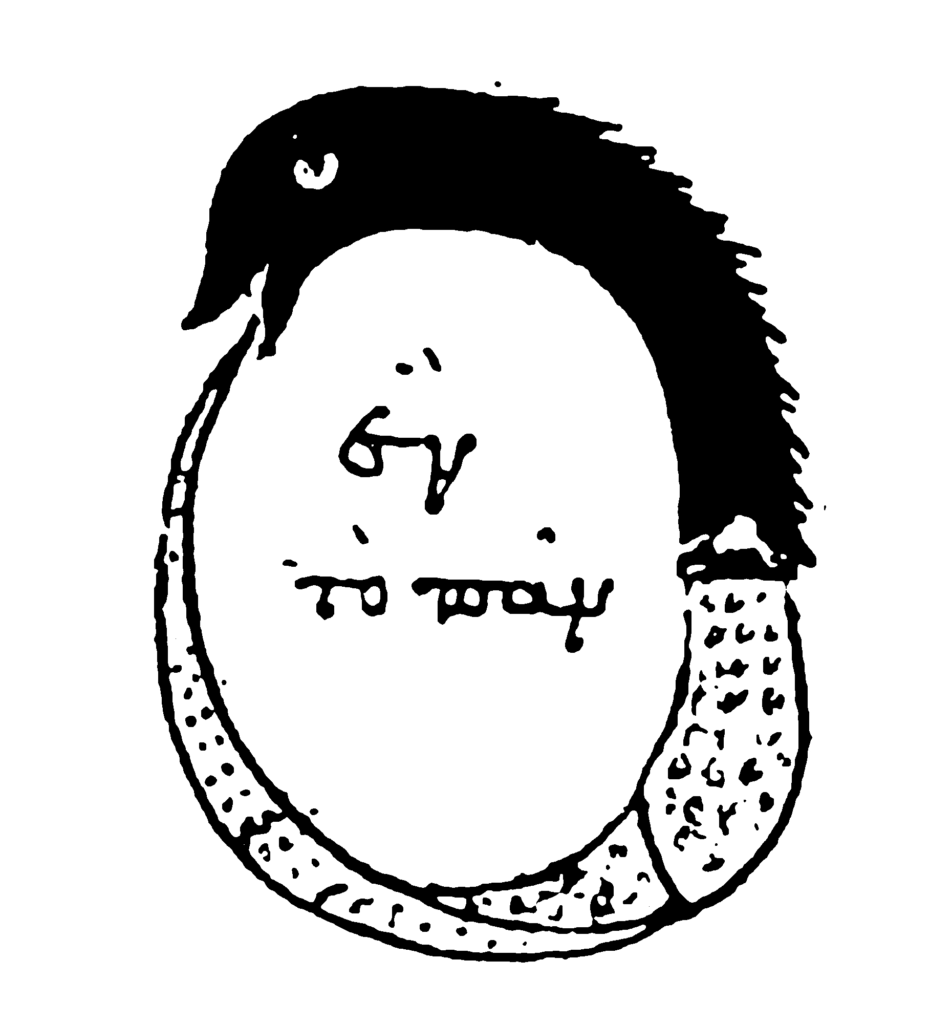
Jörmungandr lies coiled in the ocean surrounding Midgard, its body encircling the earth, its tail in its own mouth. This is not a decorative image. It is structural: Jörmungandr’s coil is what keeps the inhabited world from dissolution. When it releases its tail — when the encirclement ends — Ragnarök begins. The serpent that will kill Thor at the end of time is the same serpent currently maintaining the conditions that make Thor, and everything else, possible.
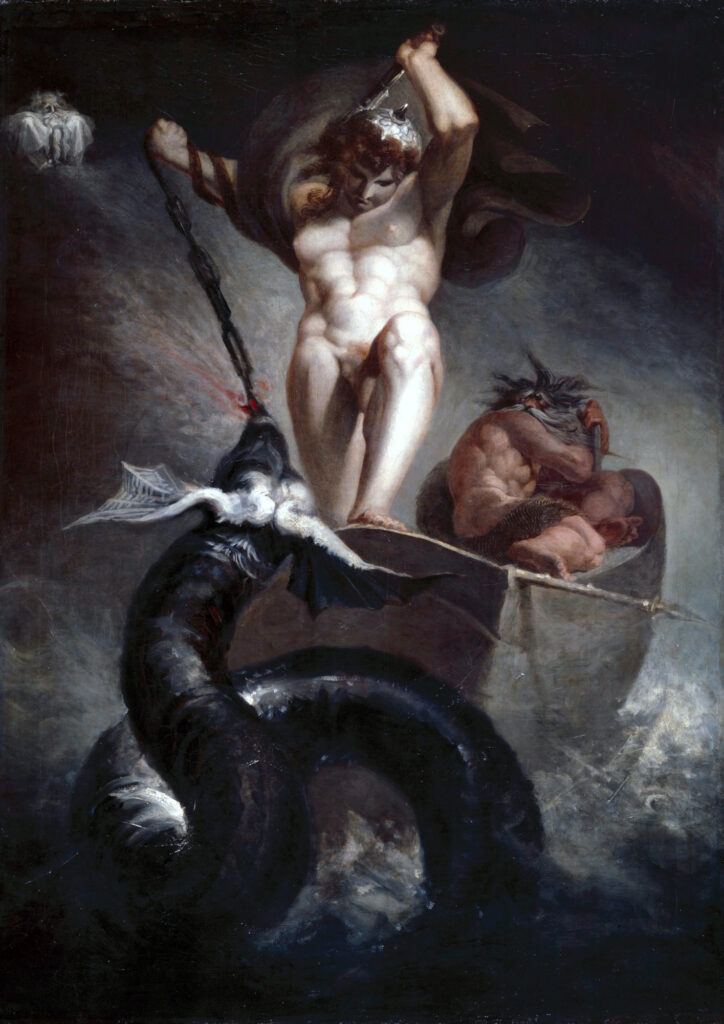
Sustainer and destroyer, collapsed into one figure. This ambivalence is not a Norse peculiarity.
In the Hindu cosmological imagination, Shesha — also called Ananta, the Endless — is the thousand-headed serpent on whose coils Vishnu rests between cosmic cycles. Shesha’s body supports the universe. At the dissolution of each cycle, the world returns to the waters from which it came, and Vishnu rests on the serpent as creation prepares to begin again. Shesha is not an element within the cosmos. It is the condition of the cosmos — the foundation on which everything else rests, and the constant against which each new cycle is measured.
Among the Fon people of the ancient kingdom of Dahomey — present-day Bénin — the cosmic serpent Dan performs an identical function. Dan’s coils surround and sustain the world; without them, the earth comes apart. Norse mythology and Hindu cosmology belong, at some level of historical depth, to interconnected ancient Eurasian cultural worlds — their convergences, however remarkable, are not beyond explanation by diffusion. Dahomey is another matter entirely.
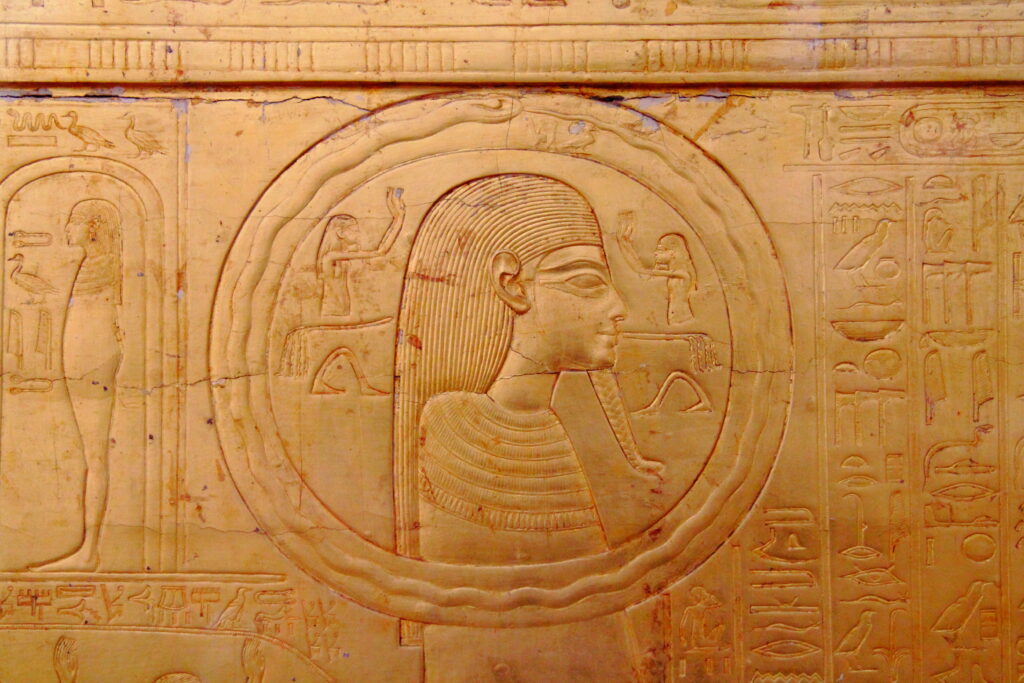
Running across all three traditions, and extending into many others, is the Ouroboros: the serpent consuming its own tail. Its earliest visual representation appears in Egyptian New Kingdom funerary texts — in the tomb of Tutankhamun, approximately 1323 BCE — where it encircles the solar deity. The image migrated into Hellenistic alchemical literature as the symbol of cyclical transformation, the same substance endlessly consuming and regenerating itself. An analogous figure, Aidophedo, has been documented among the Ashanti of present-day Ghana — a serpent biting its own tail, with no established line of transmission from Egyptian or Hellenistic sources.
The Ouroboros is not quite identical to the world-encircler. Its emphasis is temporal and cyclical rather than spatial and sustaining. But it belongs to the same family of images, operating the same symbolic logic.
The world does not contain the serpent. The serpent contains the world.
III. Water, Rain, and the Living World
The serpent does not merely live near water.
Across traditions on every inhabited continent, it governs water — the primordial form through which human communities have imagined their dependence on the element that makes survival possible. In many traditions, the distinction between governing and being collapses entirely: the serpent is water, the form that the life-giving and life-destroying force takes when it acquires a body.
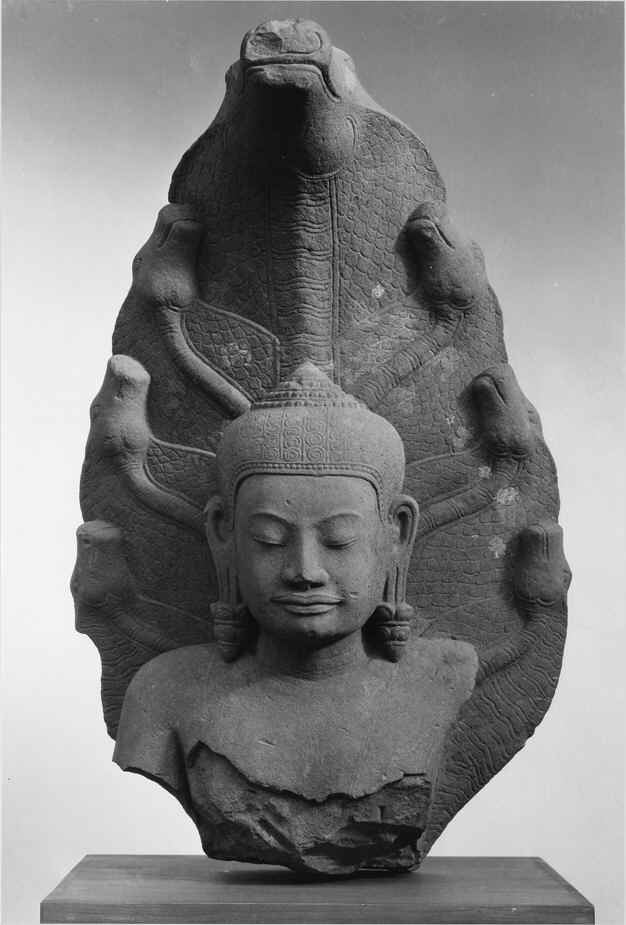
In the Hindu and Buddhist traditions of South and Southeast Asia, the Nagas are the presiding beings of rivers, lakes, and underground waters. Their goodwill brings rain; their anger brings drought. The relationship left material traces across the historical record: the tank irrigation systems of ancient Sri Lanka, the hydraulic architecture of Angkor in Cambodia, the causeways of temple complexes across the post-Indianized world were all placed under Naga protection. Iconography of the Naga proliferates wherever water is controlled and stored. The serpent deities did not merely symbolize water. They administered it — and in the ancient agrarian world, administering water meant administering life.
In Aboriginal Australian traditions, the Rainbow Serpent’s creative act is inseparable from water. It carves rivers and fills waterholes as it moves across the primordial earth; the water infrastructure of the continent is its trace. In many traditions, the rainbow — visible in the atmosphere when rain and sun meet — marks the Rainbow Serpent’s continued presence and activity. The serpent is not past tense. It is ongoing, coiling through the water cycle, present in every downpour.
In the nations of the Great Lakes, the Woodlands, and the southeastern regions of North America, the great water serpent is sovereign of rivers and lakes — enormous, horned or antlered, master of the underwater world. The figure appears across what scholars have identified as the Southeastern Ceremonial Complex, a network of shared iconographic and ritual elements distributed across large areas of eastern North America during and before the Mississippian period. This is not a marginal figure. In many of these traditions, the water serpent is among the most cosmologically central beings known.
In the Andean world, the Amaru inhabits the axis connecting the subterranean world, the earth’s surface, and the sky. The axis is fundamentally aquatic: underground water, rivers breaking through the earth, the rainbow as water made visible in the atmosphere. The Amaru is not in the water. It is the connection between the levels of the cosmos — and water is the medium through which that connection runs.
From the river-dwelling Nagas of South Asia to the waterhole-carving Rainbow Serpent of Australia, from the lake-sovereign Horned Serpent of North America to the axis-inhabiting Amaru of the Andes, the same structural logic holds: the serpent governs water, and governing water means governing everything that water governs. In the ancient world, that meant everything.
IV. Shedding Skin: Death, Renewal, Immortality
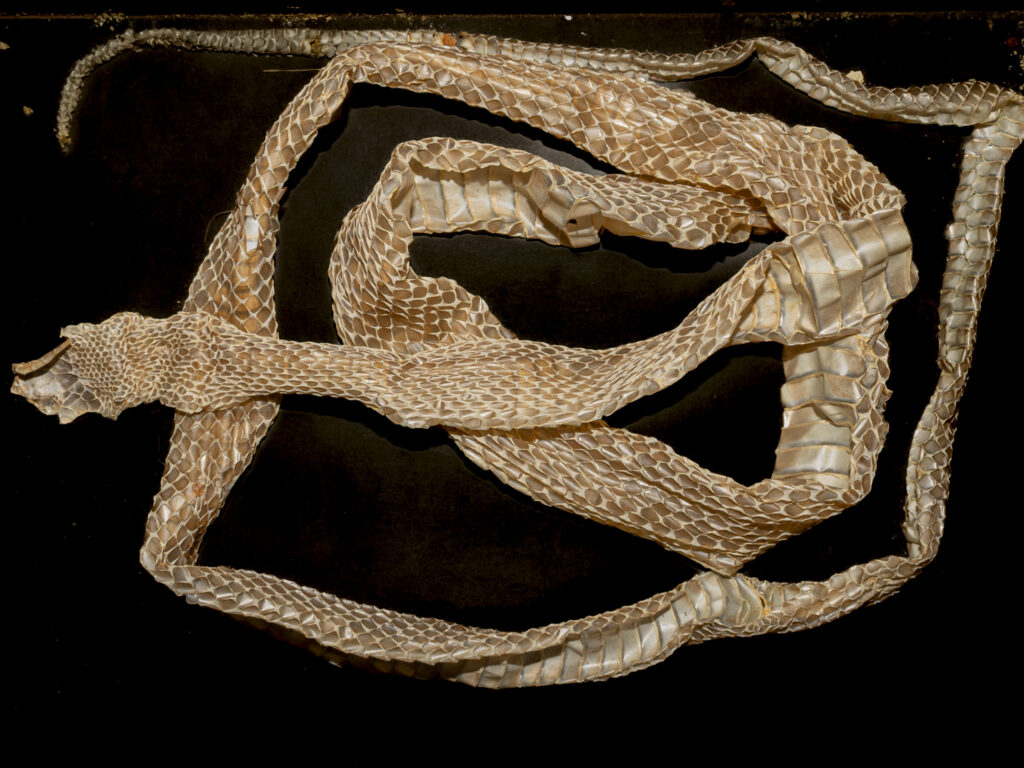
Crustaceans molt. Insects molt. Spiders molt. The serpent is not unique in this. What is specific to the serpent — large, visible, and legible to human observers in a way that a molting crab is not — is what the shed skin looks like. It is whole. Translucent. Shaped exactly like the animal that inhabited it and vacated it, eyes and all. It looks, in a way that no other natural object quite replicates, like a creature that has passed through its own death and left the evidence behind.
Mythology, across independent traditions, drew the same conclusion from that observation.
In the Epic of Gilgamesh — whose oldest surviving elements date to the early second millennium BCE — the hero returns from his quest for immortality with a plant from the bottom of the sea said to restore youth. He does not consume it immediately. While he sleeps beside a pool, a serpent rises from the water and takes it. As the serpent departs, it sheds its skin.
The logic of this scene is precise and worth stating plainly. The serpent does not merely steal the plant of immortality. It demonstrates, in the very moment of taking it, what immortality looks like. This is what it means to not die: you leave your old form behind and walk away renewed. The serpent knows how. The human does not. The shed skin is the proof.
Eliade read this episode as mythological logic rather than literary ornament: the observable biological difference between the serpent — the animal that sheds its skin — and the human — the animal that cannot — is mapped onto the conceptual distinction between immortality and mortality. The serpent has something that should have been ours. Every time it molts, it shows us what we lost.
In the shamanic traditions documented across Siberia, Central Asia, and the Americas, the serpent recurs within initiatory experience. The novice shaman undergoes ritual death — dissolution of the ordinary self — before emerging reconstituted with new capacities. The serpent is frequently present in the symbolism of this process: the initiate is sometimes described as being swallowed or devoured by a serpentine being before being reconstituted. The structure is the shed skin transposed into ritual: passage through dissolution into a renewed state, with the serpent as the being that models, or performs, the transformation.
The biological observation is universal — every human community that has observed serpents has observed molting. The mythological inference is not inevitable. That it appears to have been reached independently, across traditions without contact, is the finding. The explanation for why is deferred to the Reflections essay. Here, the pattern is sufficient.
V. Keeper of Hidden Knowledge
The serpent knows something.
This is perhaps the most consistent claim made about it across world mythologies. The specific content of the knowledge varies — transgressive, oracular, medical, spiritual. What does not vary is the structural position: the serpent stands at the boundary between what humans know and what exceeds them, and it has some relationship to what lies on the other side.
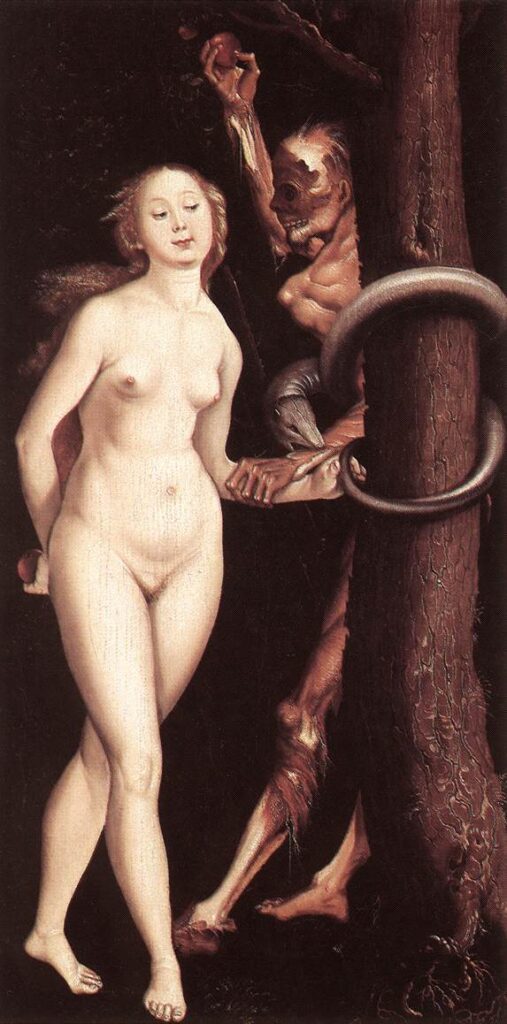
In Genesis 3, the nachash — the Hebrew word for serpent — offers the woman knowledge of good and evil. What is frequently lost in readings shaped by later theological tradition is that the serpent’s claim proves accurate. When God speaks to the divine council in Genesis 3:22, the confirmation is explicit: “the human has become like one of us, knowing good and evil.” The serpent did not misrepresent the content of the knowledge. What it did not volunteer was the full cost.
This distinction matters. The Hebrew nachash is not identified with Satan in the Genesis text — that equation develops in later Christian interpretation, reading backward into a narrative that does not make it. In the original, the serpent is one of God’s creatures, described as more arum (crafty, shrewd) than any other, whose offer of knowledge initiates the transition from innocence to consciousness. The story is more ambiguous, and more interesting, than its reception history suggests.
The Gnostic traditions of the second and third centuries recognized that ambiguity and found it generative. The Naassénes — whose name derives from nachash — and the Ophites read the Genesis serpent not as adversary but as liberator: the agent through which higher divine wisdom was transmitted to humanity against the intentions of a lesser creator who wished to keep humans in ignorance. The inversion reveals something important: the image of the serpent as knowledge-giver already contained, within itself, both readings. The ambivalence is structural, not incidental.
At Delphi, the knowledge is of a different kind — oracular, ambiguous, authoritative — but the serpentine substratum is identical. Apollo’s sanctuary was built on the site of his killing of the Python, and the Pythia derived her title directly from the serpent whose power the site had absorbed and transformed. The hidden knowledge dispensed at Delphi — the most authoritative oracle of the ancient world — was the serpent’s knowledge, redirected through Apollonian form. The Python was defeated. Its name survived in the woman who spoke the god’s words.
The Asclepian tradition operates through a related logic. Sanctuaries of Asclepius kept live serpents as sacred animals. Supplicants seeking healing underwent ritual sleep — incubation — during which the god, frequently appearing in serpentine form, communicated the means of healing directly. The serpent was the vehicle of medical knowledge that exceeded ordinary human capacity. Healing, in this tradition, comes from the same source as oracular wisdom: from the serpent, from the threshold.
In Hindu tantric traditions, the knowledge takes its most embodied form. Kundalini — the “coiled one” — is latent spiritual energy imagined as a serpent coiled at the base of the spine, dormant in the ordinary human being, awakened through yogic practice. When it rises through the system of energy centers to the crown of the skull, it brings liberation. The knowledge is not external, guarded at a border. It is internal, coiled within the body — waiting.
Genesis. Gnosticism. Delphi. Asclepius. Kundalini. The serpent at the threshold of what humans can know, across traditions that have every reason to disagree about everything else.
The Overlap, Not the Answer
Five functions. The chaos that precedes and conditions creation. The coil that holds the world in place. The sovereign of the water that sustains all life. The shed skin that models a death that does not end in death. The threshold keeper between ordinary knowledge and what lies beyond it.
No single line of cultural diffusion connects these. No transmission route runs from the Rainbow Serpent of Aboriginal Australia to the Amaru of the Andes to the Nagas of South Asia to the Horned Serpent of eastern North America. These traditions are independent. Their convergences are real and cannot be argued away.
What they share is not the same story. They share a structural role — a consistent position occupied by a consistent figure in the organization of human mythological imagination. The form that primordial power takes, across cultures that otherwise share nothing. Whether that power is generative or catastrophic, protective or consuming, it tends to be serpentine.
Why? Several explanatory frameworks exist in the scholarly literature — arguments from shared cognitive architecture, from evolutionary biology and deep human prehistory, from diffusionist models that push further back than documented contact, from the structural logic of religious imagination. Each has genuine reach. None accounts for everything. The question deserves to be treated with the care it requires — which means treating it separately, after the tradition-by-tradition evidence has been fully laid out. That essay closes this series.
The articles that follow — organized by tradition, moving from the indigenous cultures of North America through Africa, the ancient Near East, South and East Asia, and into the Pacific — will complicate what I have said here. They will show where each tradition’s serpent exceeds these five categories, where it resists them, where the internal logic of a living religious culture overflows any comparative framework imposed from outside. That tension, between the pattern comparison reveals and the specificity each tradition demands, is not a problem to be resolved. It is the condition of the work.
A Note on Sources and Scholarly Uncertainty
On the Enuma Elish and Mesopotamian material. The foundational scholarly treatment of Mesopotamian religion as it relates to cosmogony and serpentine chaos remains Thorkild Jacobsen, The Treasures of Darkness: A History of Mesopotamian Religion (Yale University Press, 1976). For the Enuma Elish text itself, the standard English scholarly edition is W.G. Lambert, Babylonian Creation Myths (Eisenbrauns, 2013) — this supersedes older translations and should be the reference of record.
On Python and the Greek material. Joseph Fontenrose, Python: A Study of Delphic Myth and Its Origins (University of California Press, 1959) remains foundational. For the broader Greek religious context, Walter Burkert, Greek Religion (Harvard University Press, English translation 1985).
On the Indo-European formula. Calvert Watkins, How to Kill a Dragon: Aspects of Indo-European Poetics (Oxford University Press, 1995). This is a specialist work in historical linguistics; its conclusions are well-established within the field.
On the Rainbow Serpent. The anthropological literature here is substantial and diverse, reflecting the diversity of Aboriginal Australian nations. W.E.H. Stanner’s essays published in Oceania between 1959 and 1963 are foundational; Deborah Bird Rose’s work on the traditions of northern Australian nations is more recent and methodologically more nuanced. Any general claim about the Rainbow Serpent should be understood as describing a widespread pattern across many distinct nations rather than a single unified tradition — a point the tradition article on Aboriginal Australia will address in full.
On Jörmungandr and Norse mythology. John Lindow, Norse Mythology: A Guide to Gods, Heroes, Rituals, and Beliefs (Oxford University Press, 2001); Rudolf Simek, Dictionary of Northern Mythology (D.S. Brewer, 1993, English translation).
On Shesha and the Puranic material. Cornelia Dimmitt and J.A.B. van Buitenen, Classical Hindu Mythology: A Reader in the Sanskrit Puranas (Temple University Press, 1978) as a point of entry; specialist Vaishnava scholarship should be consulted for specific textual claims.
On the Fon and Dan/Danh. Melville Herskovits, Dahomey: An Ancient West African Kingdom (J.J. Augustin, 1938) is the foundational reference but dates from 1938 and reflects the methodological limitations of its period. Suzanne Preston Blier’s work on the art and religion of the Fon and related peoples offers a more recent scholarly perspective; her African Vodun: Art, Psychology, and Power (University of Chicago Press, 1995) is a starting point, though whether it addresses Dan/Danh with sufficient specificity should be verified before publication. The Aidophedo parallel among the Ashanti requires verification against specialist primary anthropological sources before it can be cited with confidence.
On the Nagas. J. Ph. Vogel, Indian Serpent-Lore or the Nagas in Hindu Legend and Art (Arthur Probsthain, 1926) is foundational but a century old. More recent specialist scholarship in journals such as History of Religions and Journal of the American Academy of Religion should be consulted for the tradition article dedicated to this figure.
On the Horned Serpent and the Southeastern Ceremonial Complex. F. Kent Reilly III’s contributions to the scholarship on Mississippian cosmology are relevant; his work appears in Ancient Objects and Sacred Realms: Interpretations of Mississippian Iconography (University of Texas Press, 2007, co-edited with James F. Garber). This bibliographic detail should be verified before publication.
On the Amaru. Gary Urton, At the Crossroads of the Earth and the Sky: An Andean Cosmology (University of Texas Press, 1981) addresses Andean cosmological structures relevant to situating the Amaru; whether it treats the Amaru specifically should be verified.
On the Epic of Gilgamesh. Andrew George, The Epic of Gilgamesh (Penguin Classics, 1999; two-volume critical edition, Oxford University Press, 2003). George is the current standard scholarly authority on the text.
On the Ouroboros. Mircea Eliade, Images and Symbols (Princeton University Press, English translation 1991; original French 1952). For the alchemical tradition specifically, specialist history of science scholarship should be consulted.
On shamanism and initiatory serpent symbolism. Mircea Eliade, Shamanism: Archaic Techniques of Ecstasy (Princeton University Press, English translation 1964; original French 1951). Eliade’s comparative methodology has attracted sustained criticism — most substantially, for imposing structural uniformity on traditions whose historical particularity it fails to honor. His work remains a necessary reference while requiring careful supplementation with tradition-specific scholarship.
On the Genesis serpent and its reception. Elaine Pagels, Adam, Eve, and the Serpent (Random House, 1988) traces the interpretive history with scholarly precision. For the Hebrew text itself, Nahum Sarna’s commentary in the JPS Torah Commentary series (Jewish Publication Society, 1989) is a reliable academic reference. The identification of the nachash with Satan as a later development in Christian interpretation is a consensus position in biblical studies.
On Gnostic traditions. Bentley Layton, The Gnostic Scriptures (Doubleday, 1987). The primary ancient sources for the Naasséne and Ophite traditions are Hippolytus of Rome, Refutatio Omnium Haeresium, and Irenaeus of Lyon, Adversus Haereses — adversarial sources, written by theological opponents, to be read accordingly.
On Asclepius. Emma and Ludwig Edelstein, Asclepius: Collection and Interpretation of the Testimonies (Johns Hopkins University Press, 1945 — publication date to be verified before citation).
On Kundalini. Georg Feuerstein, The Yoga Tradition: Its History, Literature, Philosophy and Practice (Hohm Press, 1998). Specialist Sanskrit scholarship should be consulted for specific textual claims.
Bibliography — The Primordial Serpent: A World Mythology
Mesopotamia and the Ancient Near East
George, Andrew, trans. The Epic of Gilgamesh: The Babylonian Epic Poem and Other Texts in Akkadian and Sumerian. London: Penguin Classics, 1999.
George, Andrew, ed. and trans. The Babylonian Gilgamesh Epic: Introduction, Critical Edition and Cuneiform Texts. 2 vols. Oxford: Oxford University Press, 2003.
Jacobsen, Thorkild. The Treasures of Darkness: A History of Mesopotamian Religion. New Haven: Yale University Press, 1976.
Lambert, W. G. Babylonian Creation Myths. Winona Lake, IN: Eisenbrauns, 2013.
Ancient Egypt
Hornung, Erik. Conceptions of God in Ancient Egypt: The One and the Many. Translated by John Baines. Ithaca: Cornell University Press, 1982. Originally published as Der Eine und die Vielen. Darmstadt: Wissenschaftliche Buchgesellschaft, 1971.
Ancient Greece and Rome
Burkert, Walter. Greek Religion: Archaic and Classical. Translated by John Raffan. Cambridge: Harvard University Press, 1985. Originally published as Griechische Religion der archaischen und klassischen Epoche. Stuttgart: Kohlhammer, 1977.
Fontenrose, Joseph. Python: A Study of Delphic Myth and Its Origins. Berkeley: University of California Press, 1959.
Indo-European Linguistics and Comparative Poetics
Watkins, Calvert. How to Kill a Dragon: Aspects of Indo-European Poetics. Oxford: Oxford University Press, 1995.
Norse and Germanic Traditions
Lindow, John. Norse Mythology: A Guide to Gods, Heroes, Rituals, and Beliefs. Oxford: Oxford University Press, 2001.
Simek, Rudolf. Dictionary of Northern Mythology. Translated by Angela Hall. Cambridge: D.S. Brewer, 1993. Originally published as Lexikon der germanischen Mythologie. Stuttgart: Kröner, 1984.
Hindu and Buddhist Traditions
Dimmitt, Cornelia, and J. A. B. van Buitenen, eds. and trans. Classical Hindu Mythology: A Reader in the Sanskrit Puranas. Philadelphia: Temple University Press, 1978.
Feuerstein, Georg. The Yoga Tradition: Its History, Literature, Philosophy and Practice. Prescott: Hohm Press, 1998.
Vogel, J. Ph. Indian Serpent-Lore or the Nagas in Hindu Legend and Art. London: Arthur Probsthain, 1926.
Aboriginal Australia
Rose, Deborah Bird. Dingo Makes Us Human: Life and Land in an Australian Aboriginal Culture. Cambridge: Cambridge University Press, 1992. [Relevance to Rainbow Serpent traditions specifically to verify against this volume before citation; Rose’s later Nourishing Terrains, Australian Heritage Commission, 1996, may be more directly pertinent.]
Stanner, W. E. H. “On Aboriginal Religion.” Oceania 30–33 (1959–1963). [Published as a serial article series across six installments; exact volume and issue numbers to verify before citation.]
West Africa
Blier, Suzanne Preston. African Vodun: Art, Psychology, and Power. Chicago: University of Chicago Press, 1995.
Herskovits, Melville J. Dahomey: An Ancient West African Kingdom. 2 vols. New York: J. J. Augustin, 1938.
The Hebrew Bible and Related Traditions
Pagels, Elaine. Adam, Eve, and the Serpent. New York: Random House, 1988.
Sarna, Nahum M. Genesis. JPS Torah Commentary. Philadelphia: Jewish Publication Society, 1989.
Gnostic Traditions
Layton, Bentley. The Gnostic Scriptures: A New Translation with Annotations and Introductions. Garden City: Doubleday, 1987.
Asclepius and Ancient Medicine
Edelstein, Emma J., and Ludwig Edelstein. Asclepius: Collection and Interpretation of the Testimonies. Baltimore: Johns Hopkins University Press, 1945. [Publication date to verify before citation.]
Comparative Religion and Methodology
Eliade, Mircea. Images and Symbols: Studies in Religious Symbolism. Translated by Philip Mairet. Princeton: Princeton University Press, 1991. Originally published as Images et Symboles. Paris: Gallimard, 1952.
Eliade, Mircea. Patterns in Comparative Religion. Translated by Rosemary Sheed. New York: Sheed and Ward, 1958. Originally published as Traité d’histoire des religions. Paris: Payot, 1949.
Eliade, Mircea. Shamanism: Archaic Techniques of Ecstasy. Translated by Willard R. Trask. Princeton: Princeton University Press, 1964. Originally published as Le Chamanisme et les techniques archaïques de l’extase. Paris: Payot, 1951.